Pedagogical innovation for teachers

Discover how to innovate and continuously improve your teaching practices through experimentation and peer learning.

About the course
Based on Justin Reich's book Iterate, this course invites teachers to innovate and continuously improve their pedagogical practices. This course acts as a catalyst for teachers to get excited about the challenge of innovation, encouraging teacher-led experimentation and peer learning. Over four weeks, participants will explore concepts of pedagogical innovation, experimentation and peer learning cycles, design thinking for pedagogical leaders, and collaborative innovation cycles.
How it works
You will join a group of 2 to 5 colleagues, and as a group, you will meet 4 times, either in person or online, at a time you all agree on.
Join a circle
Create your circle or request to join a colleague's. The host accepts the request.
Agree on a schedule
Decide the most convenient time for your sessions, online or in person.
Join and collaborate
When the session arrives, connect with your colleagues and complete the activities together.
What's included
Requirements
- Be an active teacher
- Willingness to experiment and learn
- Interest in educational innovation
- Availability to participate in sessions
Course syllabus
Session 1: Introduction to pedagogical innovation
- • Reflect on the process of changing teaching practices and its implications
- • Understand the cycle of experimentation and collaborative learning for innovation
- • Reflect on their teaching practices and their needs for change
Session 2: Design thinking for pedagogical leaders
- • Recognize the relevance of design thinking as a promoter of innovation
- • Analyze design thinking for higher education teachers
Session 3: The collaborative innovation cycle
- • Understand the stages and attitudes of design thinking for education teachers
- • Prototype an educational innovation applying design thinking
Session 4: Design thinking methods for innovation
- • Understand the innovation toolkit for educators
- • Evaluate which toolkit tool could be used in their teaching practice
Meet the instructor
Sergio Reyes
Postdoctoral researcher at the University of Lleida and professor at Tec de Monterrey, specialized in educational innovation and technology. With 16 years of teaching experience, he has led important initiatives such as the Mexican Network of Writing Centers and conducts research on learning mediated by digital technology.
There are only
good questions ;)
Still have questions? Write to us!
Related courses
All courses
Agency and concept-based learning
Explore the foundations of IB, the student profile, student agency, and concept-based learning to transform your teaching practice.


Agency: Helping Students Take the Lead
Practical strategies to create classroom environments where students feel empowered and take ownership of their learning journey.

AI Builder Bootcamp for Educators
Build AI-powered educational tools using no-code and low-code platforms, creating functional apps from ideation to implementation.

Related articles
Visit the blog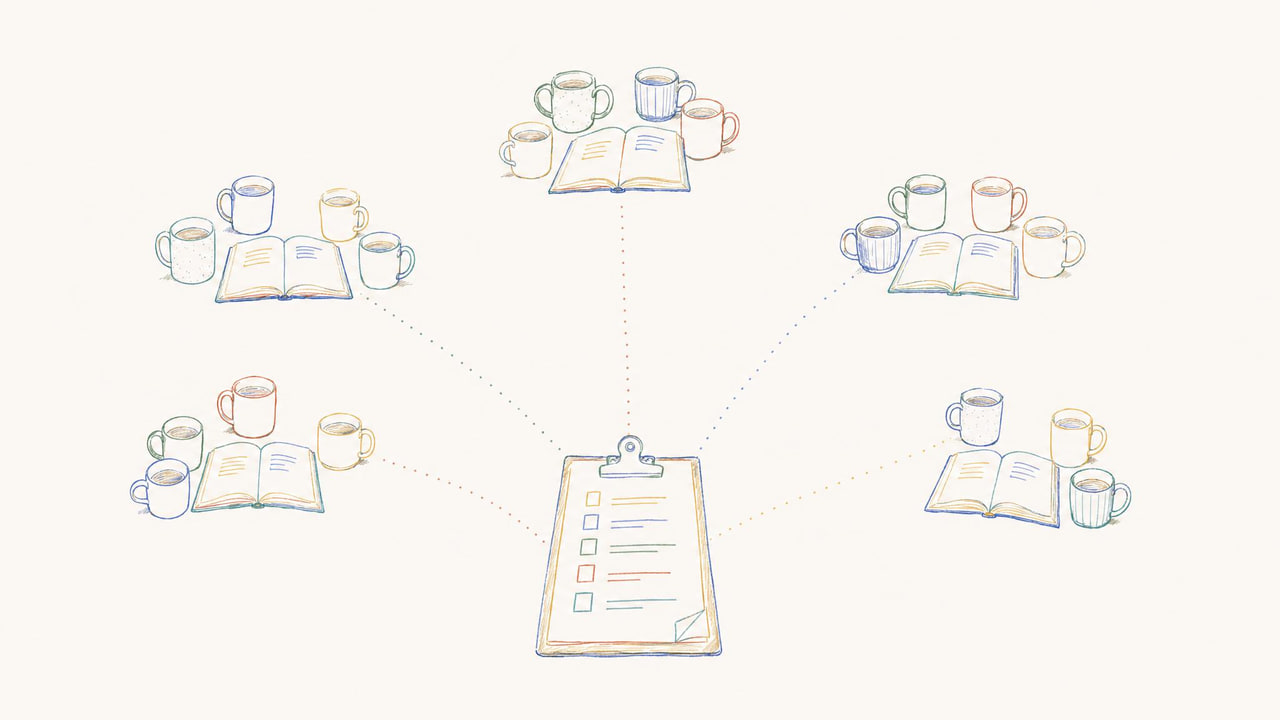
Professional learning communities and how to sustain them
What the evidence says about professional learning communities, why they stall on coordination, visibility and management, and what they need to grow. Written for school leaders.

AI for teacher development: learning alone or with your team
55% of Chilean teachers already use AI at work, but how they adopt it matters as much as whether they do. The case for embedding AI in existing PLCs, and three steps for school leaders.

Written comments that guide revision
What written feedback can contribute, when it may be useful to concentrate it on one goal, and the limits of the available studies.